← MeoMock / Written exams
Class 1 (Chief Engineer) Engineering Management 📅 Jul 2025

Exam Question

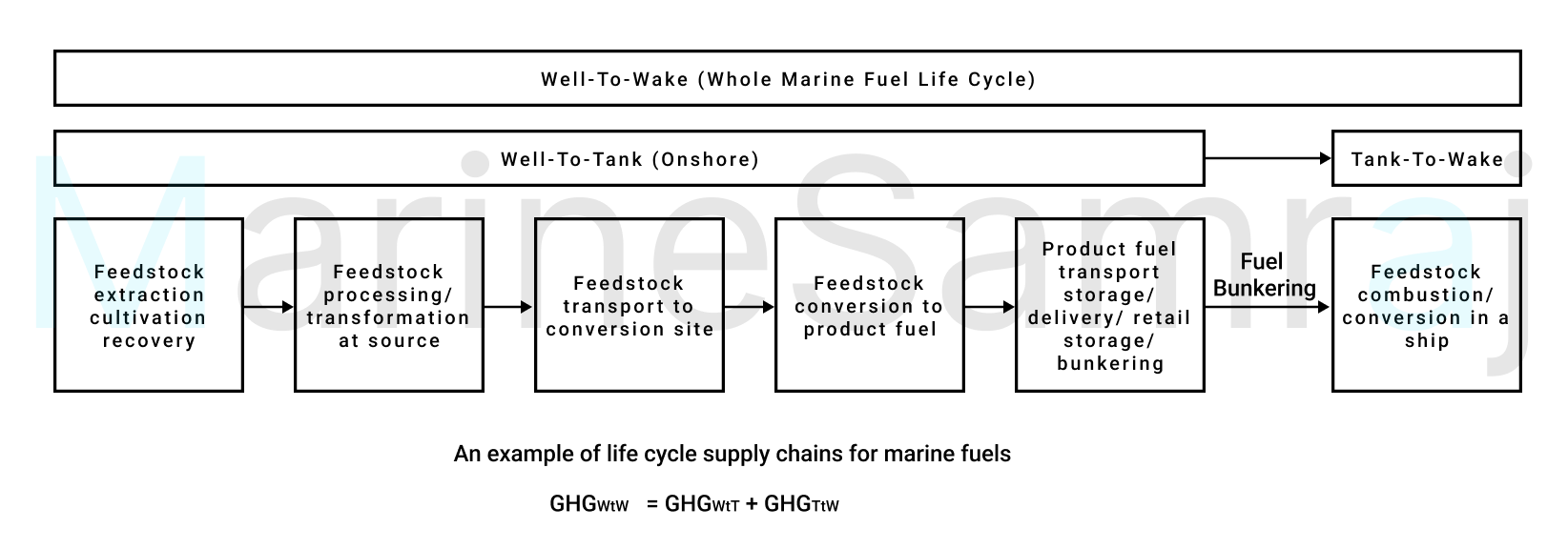
(a) Explain Life Cycle Analysis (LCA) of fuels used in ship operations. What are the different stages of Life Cycle Analysis of fuels. (8) 

(b) Discuss Well-to-Wake (WtW) and Well to Tank (WtT) concept employed in GHG emission calculation of fuels used in maritime sector. Explain with justification which of these methodologies would be feasible for shipping industry (8) 
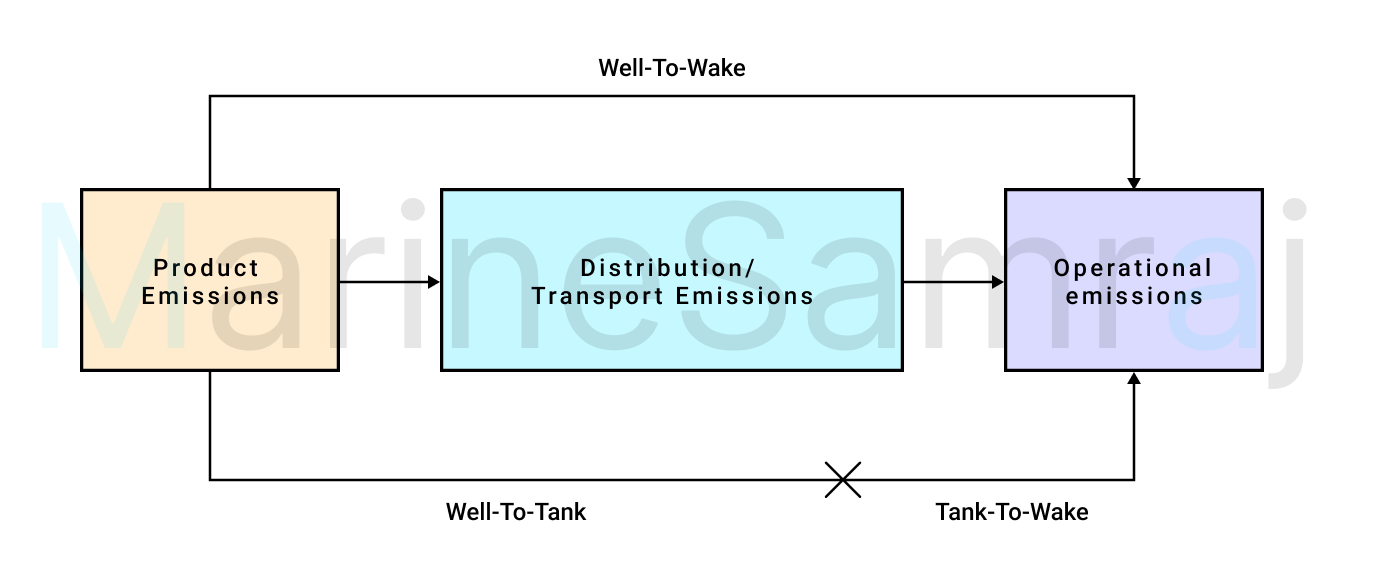
Exam question diagramExam question diagram

Reference Answer

### (a) Life Cycle Analysis (LCA) of Fuels
Life Cycle Analysis (LCA) is a comprehensive and systematic methodology used to evaluate the total environmental impact, specifically the greenhouse gas (GHG) emissions, associated with the entire lifespan of a marine fuel. The analysis extends from the initial extraction of raw materials to the final use of the energy onboard a vessel, a concept often termed "cradle-to-grave" or, in this context, "Well-to-Wake".
As established by the IMO's Marine Environment Protection Committee (MEPC 81) in the **2024 Marine Fuel Life Cycle Guidelines**, LCA provides a standardized framework for assessing the GHG intensity of all marine fuels, including electricity. The assessment considers the key greenhouse gases: Carbon Dioxide (CO₂), Methane (CH₄), and Nitrous Oxide (N₂O), accounting for factors such as methane slip.
#### Stages of Life Cycle Analysis

Full answer on MeoMock — surveyor-grade reference answers for 7,000+ written exam questions.

View plans Browse library

← Browse more questions

Prepare on Android — MeoMock on Google Play