← MeoMock / Written exams
Class 2 (2nd Engineer) MEKG 📅 Jan 2023

Exam Question

Explain the working principle of differential Pressure Transmitter with the help of diagram and explain the following parts with their usages.

(a) Zero and span calibration

(b) Negative feedback bellow

(c) Pilot amplifier functions

(d) Zero Elevation Concept
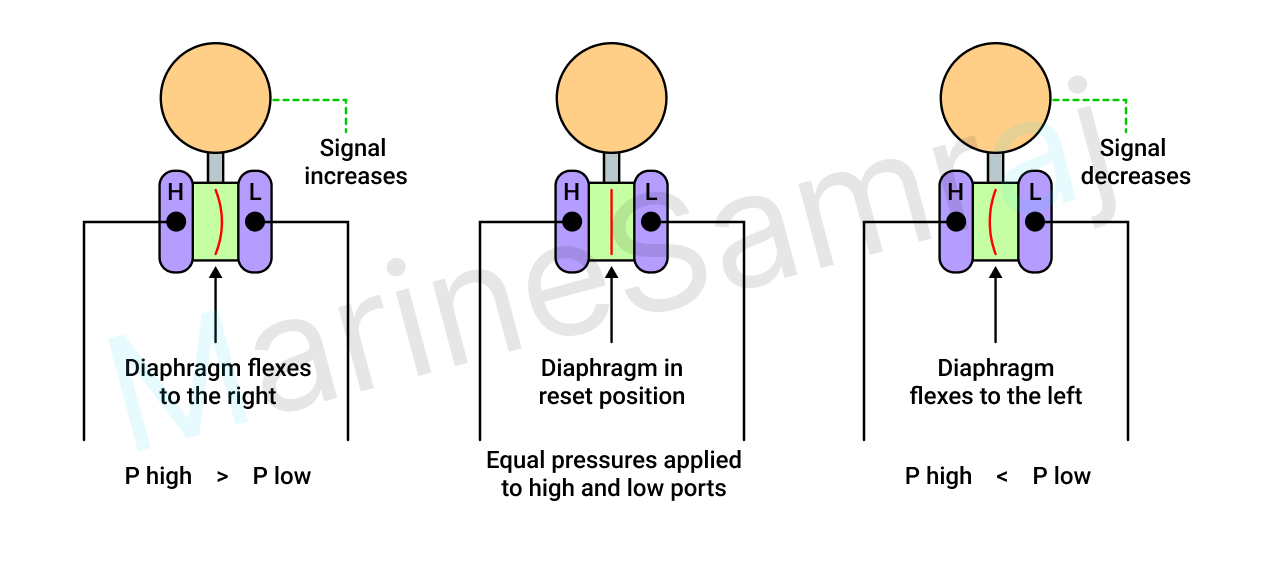
Exam question diagram

Reference Answer

### Working Principle of a Differential Pressure Transmitter
A Differential Pressure (DP) Transmitter is an instrument that measures the difference in pressure between two points and converts this measurement into a standardized output signal (typically 3-15 psi pneumatic or 4-20 mA electrical). It operates on the force-balance principle, where the force generated by the differential pressure on a sensing element is continuously balanced by a feedback force.
**Principle of Operation:**
1. **Pressure Sensing:** The transmitter has two pressure ports, a High Pressure (HP) side and a Low Pressure (LP) side. These ports are connected via impulse lines to the two points in the process where pressure is to be measured.

Full answer on MeoMock — surveyor-grade reference answers for 7,000+ written exam questions.

View plans Browse library

← Browse more questions

Prepare on Android — MeoMock on Google Play