← MeoMock / Written exams
ETO ETO Exam papers 📅 Jul 2024

Exam Question

(a) Explain why it is necessary to have reverse power protection for alternators intended for operation. (6)

(b) (i) Sketch a reverse power trip. (5)

(ii) Explain briefly the principle on which the operation of this power trip is based and how tripping is activated. (5)
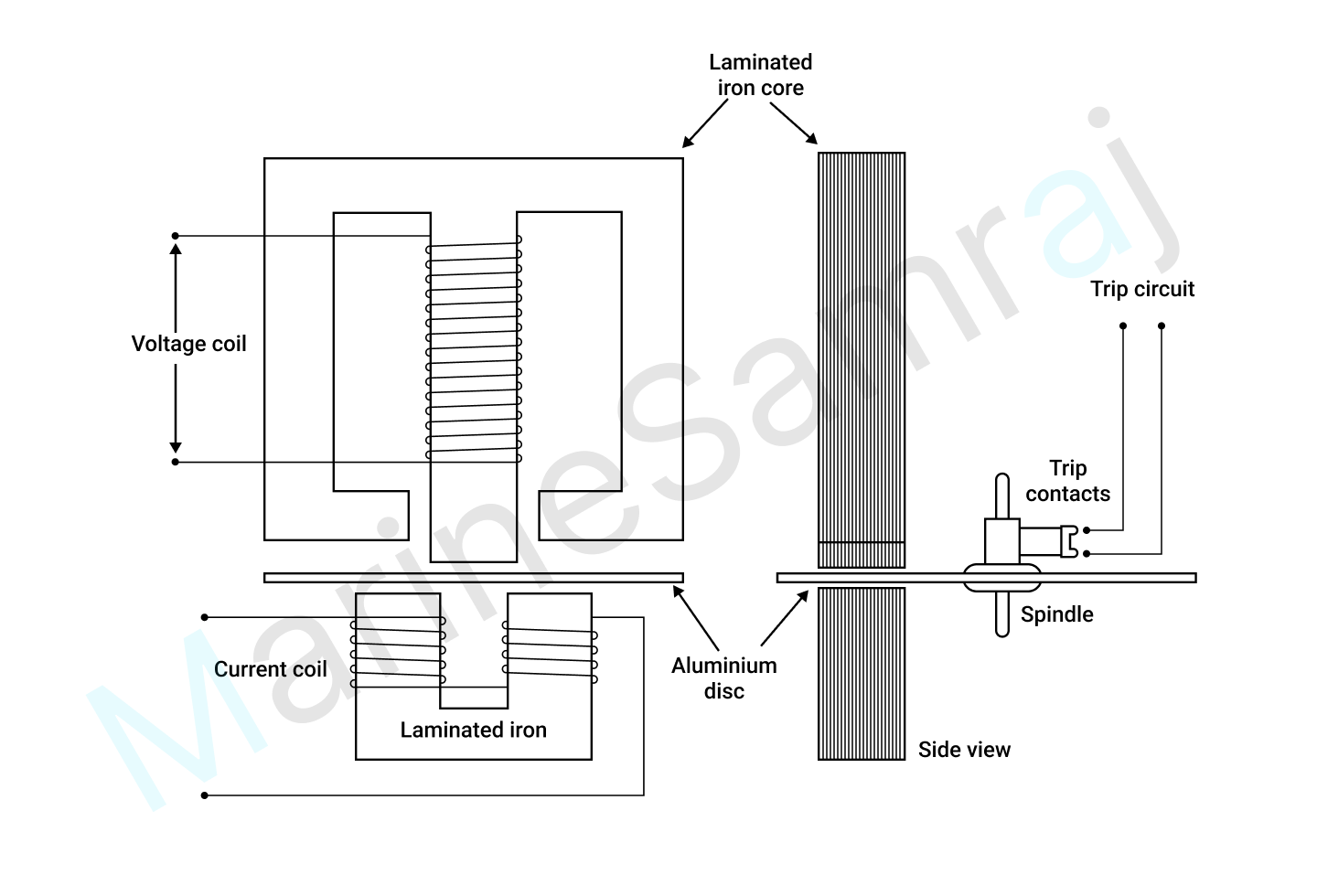
Exam question diagram

Reference Answer

(a) Necessity of Reverse Power Protection for Alternators in Parallel Operation:
Reverse power protection is essential to safeguard alternators in parallel operation from the adverse effects of reverse power flow. When the prime mover of an alternator fails to provide sufficient torque, the alternator starts acting as a motor and draws power from the busbar—a condition known as the motoring effect . This situation can cause significant damage to the prime mover, as it may overspeed due to the additional energy supplied by the alternator. Such overspeed can lead to mechanical failures, including damaged shafts and broken turbine blades.
Furthermore, the reverse power effect imposes additional loads on other alternators in the system. These alternators may overload and trip due to excessive power demands, potentially leading to a blackout that compromises the safety and operational reliability of the vessel. The alternator subjected to reverse power may also lose its residual magnetism , impairing its ability to generate power effectively when restored.
To mitigate these risks, a reverse power relay is installed. This relay monitors the direction of power flow and trips the circuit breaker if reverse power exceeds a preset threshold (typically 10% of full load). The relay incorporates a time delay to prevent tripping due to transient conditions during synchronization or other short-term disturbances.

Full answer on MeoMock — surveyor-grade reference answers for 7,000+ written exam questions.

View plans Browse library

← Browse more questions

Prepare on Android — MeoMock on Google Play