← MeoMock / Written exams
Class 2 (2nd Engineer) MET 📅 Nov 2023

Exam Question

What is the meant by "excitation" in an alternator? With the help of a neat diagram of brushless alternator labeling all the important parts. Explain how the excitation is achieved in a brushless alternator. (16)
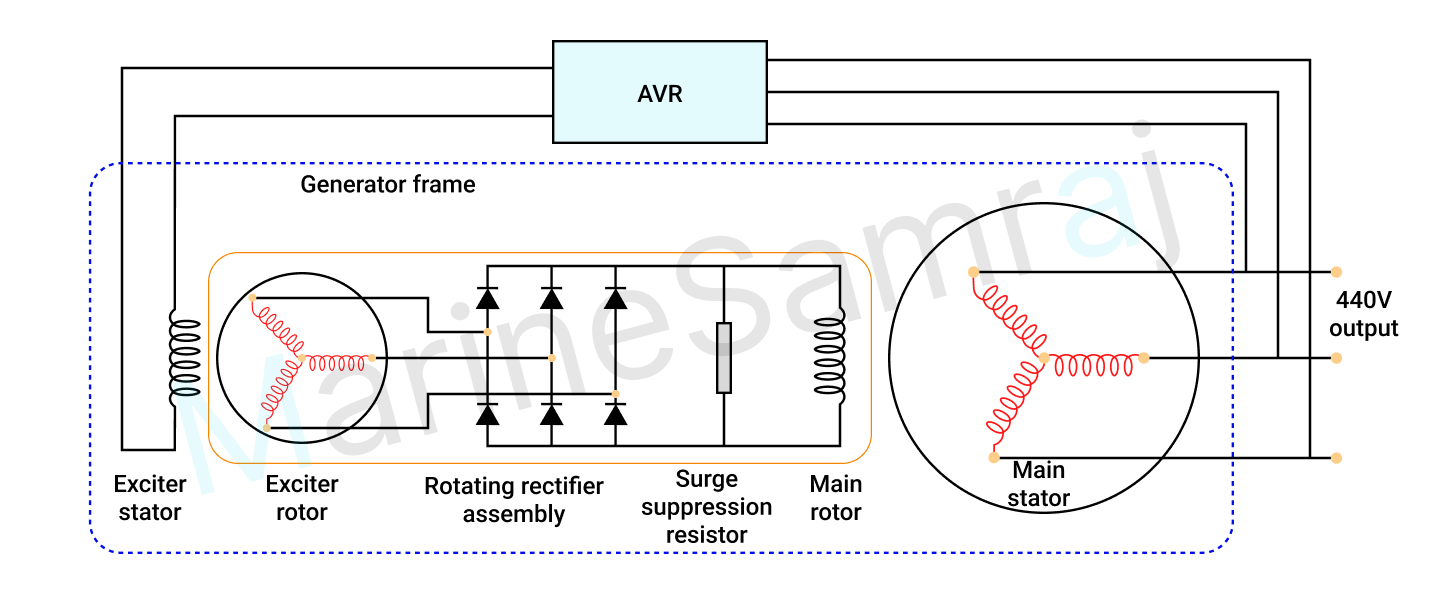
Exam question diagram

Reference Answer

A brushless alternator is a type of electrical generator that produces alternating current (AC) without the need for brushes and commutators.
Rotor: Instead of using brushes and a commutator, a brushless alternator has a rotor with permanent magnets or electromagnets. These magnets generate a rotating magnetic field when electricity is supplied to them.
Stator: The stator consists of coils of wire arranged around the rotor. As the magnetic field of the rotor rotates, it induces an alternating current in the stator windings through electromagnetic induction.
Rectifier: The alternating current produced in the stator windings is then converted into direct current (DC) by a rectifier assembly, typically consisting of diodes. This DC is necessary for the excitation of the rotor's magnets.

Full answer on MeoMock — surveyor-grade reference answers for 7,000+ written exam questions.

View plans Browse library

← Browse more questions

Prepare on Android — MeoMock on Google Play