← MeoMock / Written exams
ETO ETO Exam papers 📅 Dec 2024

Exam Question

What is zener diode and how does it regulate the voltage? What happens to the series current, load current and zener current when the d.c. input voltage of a zener regulator increases? Draw a neat diagram of zener regulator and explain. (16)
Exam question diagramExam question diagram

Reference Answer

A Zener Diode, also known as a breakdown diode, is a heavily doped semiconductor device that is designed to operate in the reverse direction.
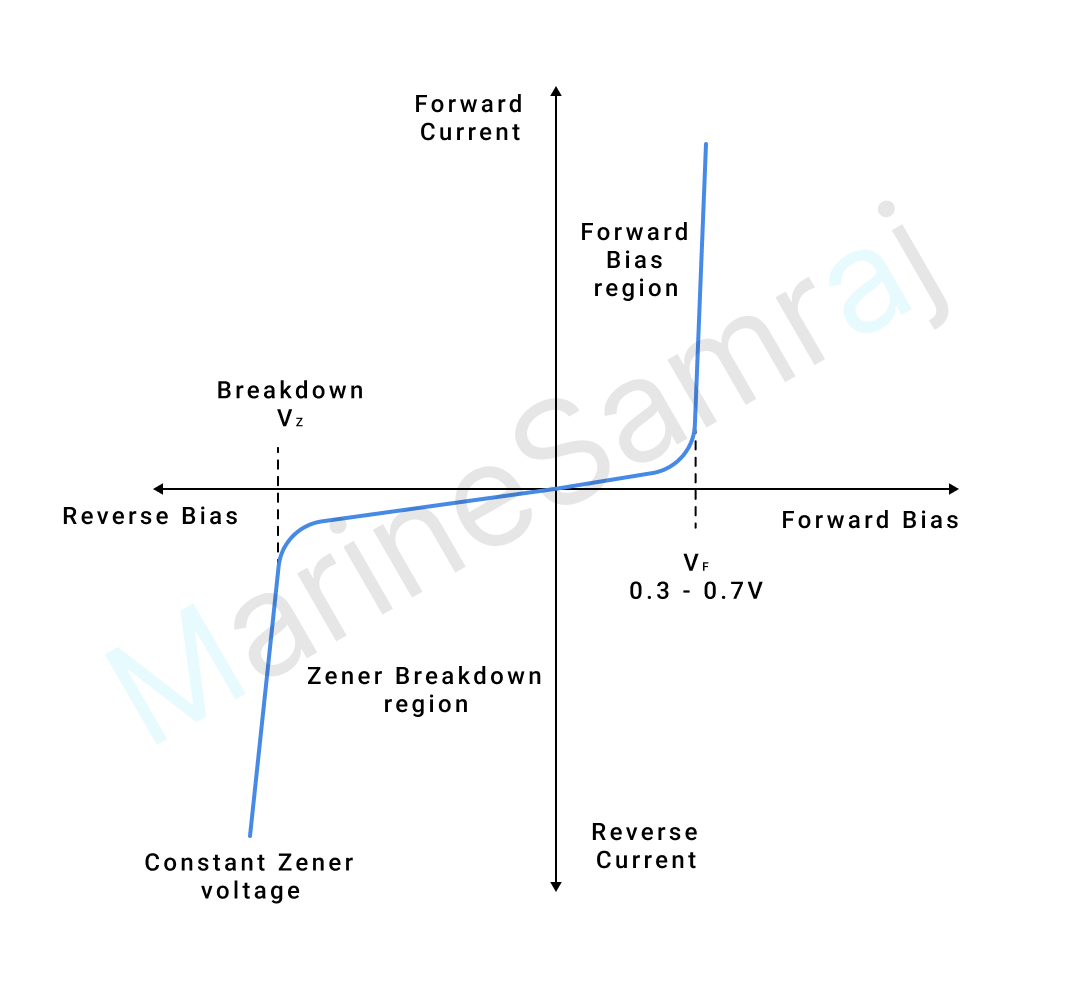
In the reverse biased state if a voltage smaller than the breakdown voltage is applied to a zener it will not conduct more than its leakage current but if a high enough voltage is applied the zener will start to conduct. As can be seen from the normal diode characteristic, when the diode breaks down, the voltage across it is (ideally) constant regardless of the current that it is carrying. Zener diodes are manufactured with specific breakdown voltages ranging from a few volts to a few hundred volts. If they are incorporated in circuits with resistors then the voltage across the zener will be constant even in the event of a surge in supply voltage.
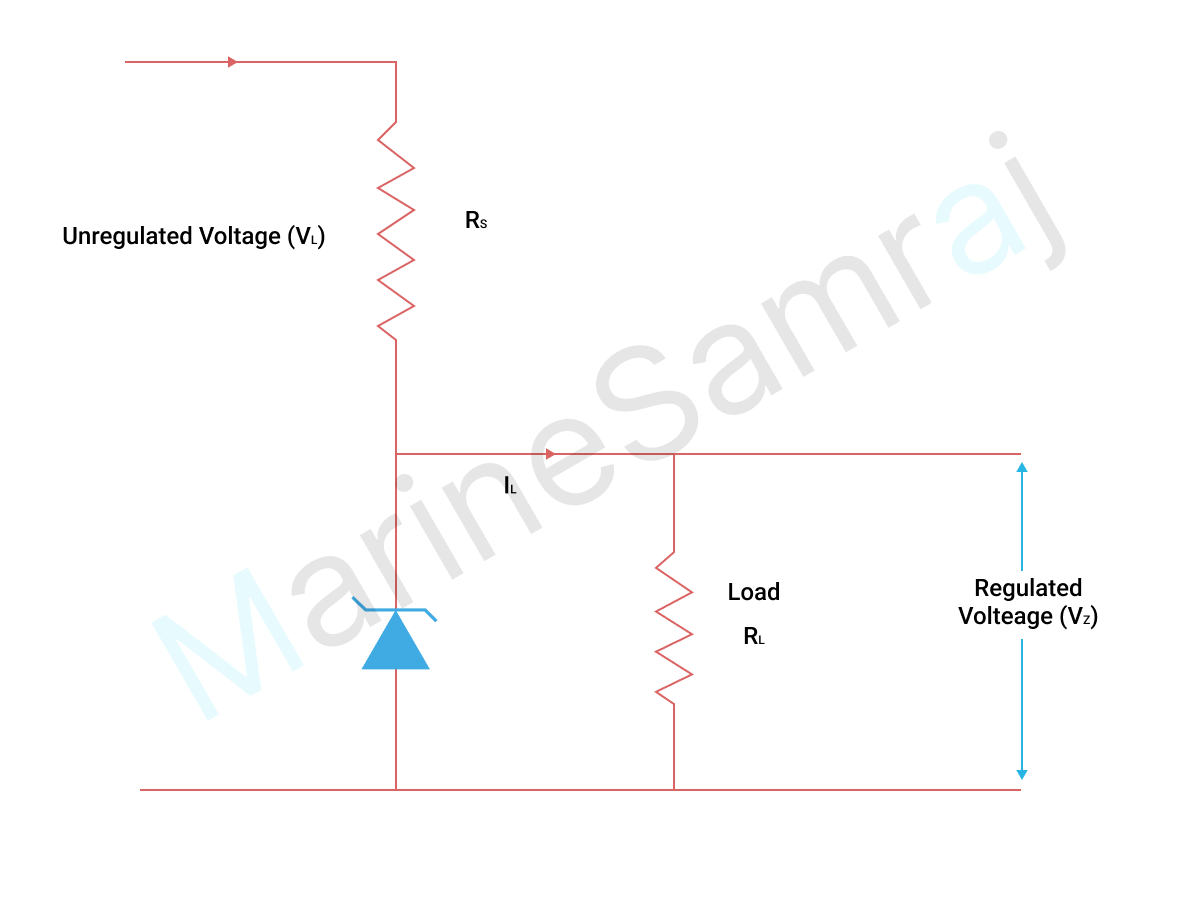
When the d.c. input voltage of a zener regulator increases, Zener current and Series current increases, but the load current remains unchanged.
There is a series resistor connected to the circuit in order to limit the current into the diode. It is connected to the positive terminal of the d.c. Current through the diode increases when the voltage across the diode tends to increase which results in the voltage drop across the resistor. Similarly, the current through the diode decreases when the voltage across the diode tends to decrease. Here, the voltage drop across the resistor is very less, and the output voltage results normally.
← Browse more questions

Prepare on Android — MeoMock on Google Play