← MeoMock / Written exams
Class 2 (2nd Engineer) MET 📅 Mar 2019

Exam Question

(a) Which of the following three motors has the poorest speed regulation: shunt motor, series motor or cumulative compound motor? Explain. (6)

(6) A 440V shunt motor takes an armature current of 30A at 700 rev/min. The armature resistance is 0.7ohm. If the flux is suddenly reduced 20 per cent, to what value will the armature current rise momentarily? Assuming unchanged resisting torque to motion, what will be the new steady values of speed and armature current? Sketch graphs showing armature current and speed as functions of time during the transition from initial to final, steady-state conditions (10)
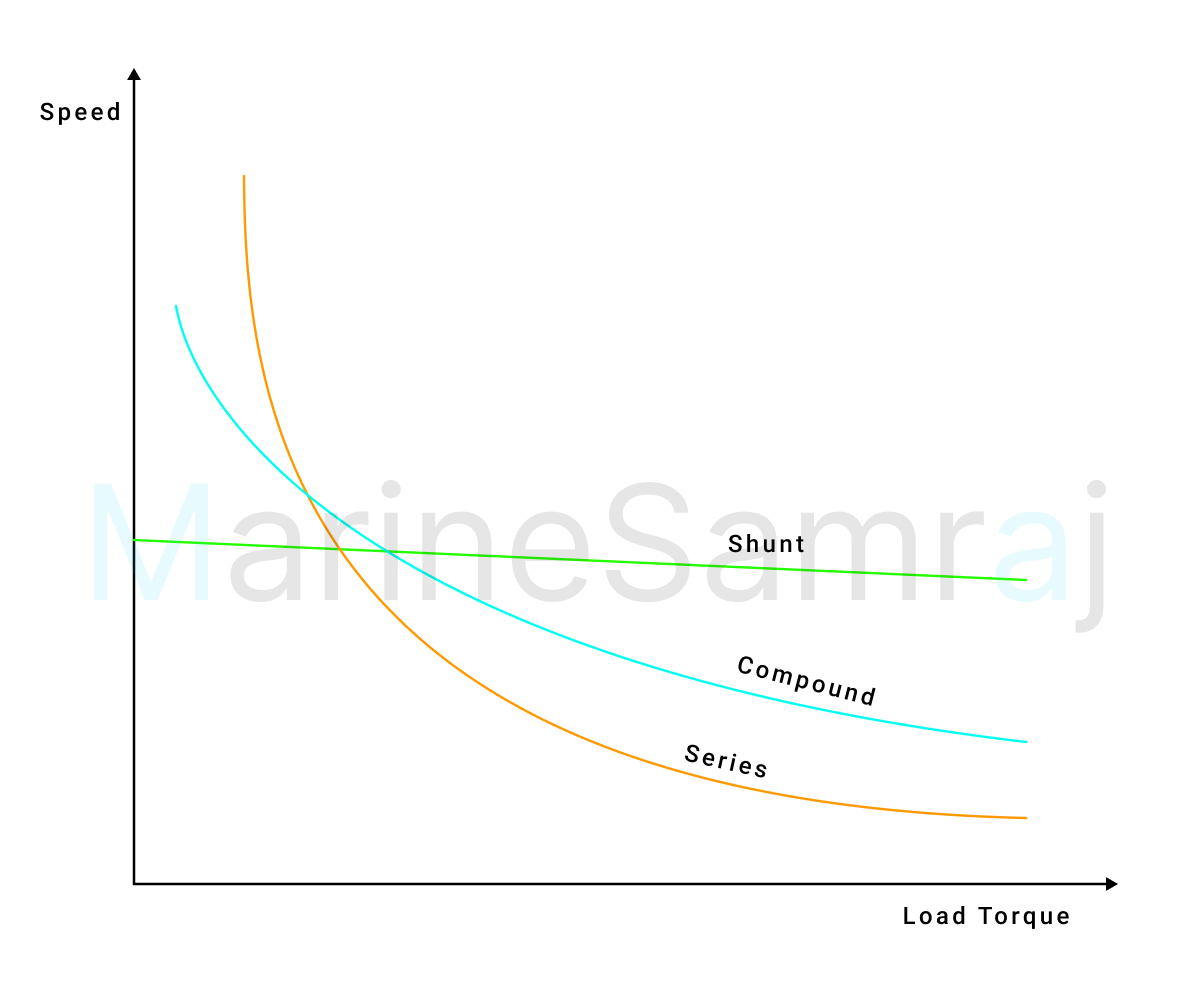
Exam question diagram

Reference Answer

(a) Series motor has the poorest speed regulation among the three motors.
Speed regulation refers to the change in motor speed from no load to full load, expressed as a percentage of the full-load speed:
$$\%\:Speed\:regulation=\frac{No\:load\:speed\:-\:Full\:load\:speed}{Full\:load\:speed}\:\times100$$
Shunt Motor: The field windings are connected in parallel (shunt) with the armature. Shunt motors have a nearly constant speed regardless of load changes, offering excellent speed regulation. This is because the field current remains relatively stable, keeping the magnetic flux constant.

Full answer on MeoMock — surveyor-grade reference answers for 7,000+ written exam questions.

View plans Browse library

← Browse more questions

Prepare on Android — MeoMock on Google Play